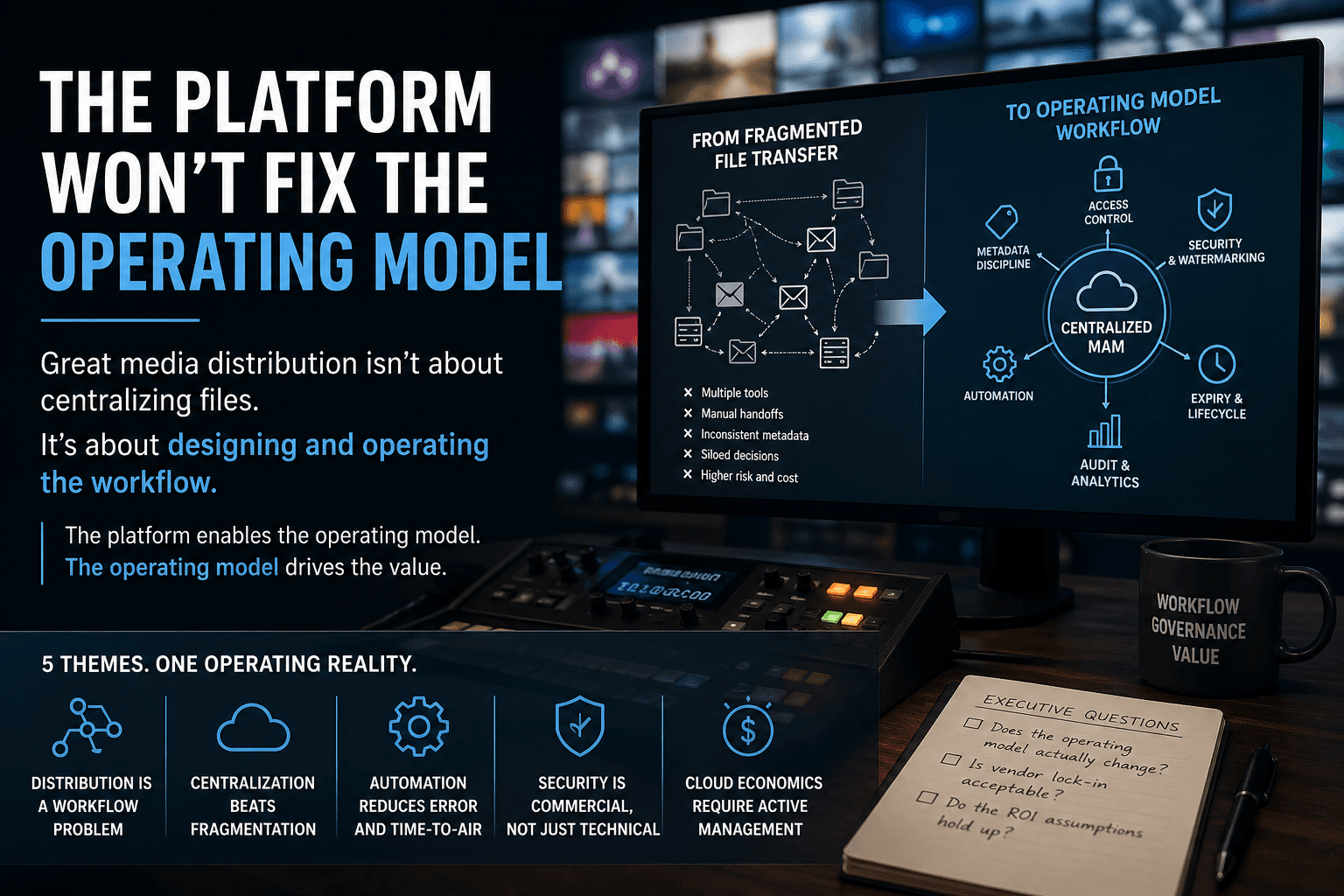
Most conversations about media distribution start with the platform. The real conversation should start with the operating model.
I recently reviewed a report arguing that modern media distribution has outgrown fragmented file-transfer tools, and that a centralized, cloud-based media asset management platform is the answer. The argument is technically sound. But I think it understates where organizations actually get stuck.
Here's what I'd add from an advisory perspective:
The platform is rarely the problem. The operating model usually is. A new MAM doesn't fix unclear ownership, inconsistent metadata disciplines, or siloed packaging decisions. If the workflow is broken, centralizing it at scale just scales the problem.
Governance has to be designed in, not bolted on later. The report rightly positions access controls, watermarking, expiry windows, and audit trails as strategic, not optional. I'd go further: if governance isn't defined before the platform is selected, you'll spend the first 18 months retrofitting controls that should have been requirements.
The five themes the article covers are the right ones: distribution is a workflow problem, not a file problem; centralization beats fragmentation; automation reduces error and time-to-air; security is commercial, not just technical; and cloud economics require active management, since egress and API charges have a way of surprising people.
But the executive questions go one level deeper: Does the operating model actually change with the platform? Is vendor lock-in acceptable given the integration depth required? And do the ROI assumptions hold up once you factor in real usage patterns, integration complexity, and cloud cost variability?
What's your experience been with centralized MAM adoption? Genuinely curious where others have landed.